
Space
The brain’s representation of space is established by a system of interconnected brain areas that do not belong to only one well-defined anatomical system. There are multiple different ways in which spatial information is represented across and within these different areas, consistent with the principles of distributed representations.
Across different species, different aspects of space are emphasized, with the rodent having a particularly well-documented set of navigational spatial representations that support the ability to locomote around in larger environments. The primate adds a well-developed ocular spatial system based on flexible eye and head saccade movements that are used for visual search in complex environments such as a jungle full of many different kinds of opportunities and threats.
Motion (the first derivative of position) is a big part of spatial processing across all of these scales, with vestibular signals providing a sensory representation of head and body movements. Motion also implies time in order to compute velocity and acceleration, and several key elements of the spatial pathways have been implicated representing time in various ways.
The relationship between space and memory is also important, because many of the areas involved in constructing representations of space are tightly interconnected with (and part of) the hippocampus system, which is critical for episodic memory. Time and memory are obviously strongly interrelated, even at a fast timescale due to the strong influence of the theta rhythm on hippocampal function, which is generated and broadcast by key elements of the spatial system.
At a phenomenological level, some of the most amazing examples of animal behavior are based on impressive navigational abilities, from the birds and fish that migrate thousands of miles every year, to the smaller scale but no less impressive intelligent route finding of animals around their home territory (see Grieves & Jeffery, 2017 for many examples).
Spatial reference frames
• Allocentric is relative to the external environment.
• Egocentric is in relation to your own body. There are many variations of this, including eye-centered, head-centered, and trunk-centered.
Path integration
Path integration (and dead reckoning) are two foundational elements of spatial processing, reflecting the ability to keep track of where you are based on incremental changes in position along different direction vectors. They represent the essential integration of space and time needed to compute velocity vectors, which helps us to understand the nature of the underlying neural systems.
As shown in figure X, if you walk for 20 seconds while traveling in a northerly direction at a rate of 10 cm per second, then turn right by 45 degrees and proceed for another 20 seconds at the same rate, you should be able to figure out where you will end up. As you can see, these computations involve knowing the angle of motion relative to some kind of allocentric reference frame (e.g., “north”), and the speed of motion.
Both of these quantities can be computed by incrementally updating an internal compass-like heading direction and speed estimate based on sensory cues from the vestibular system, which detects acceleration (i.e., the second derivative of position) of the rotational and linear forms.
In order to perform such an integration, you need some kind of representation of the amount of time over which the acceleration has occurred. Indeed, the importance of accurate timekeeping represented a major technical challenge for early ocean explorers. It appears that the theta rhythm, which is generated in the same system that drives this path integration process, provides the fundamental timing signal for this integration process.
Role of hippocampus: Wallace & Whishaw, 2003; Whishaw et al., 1997
The mammillothalamic system
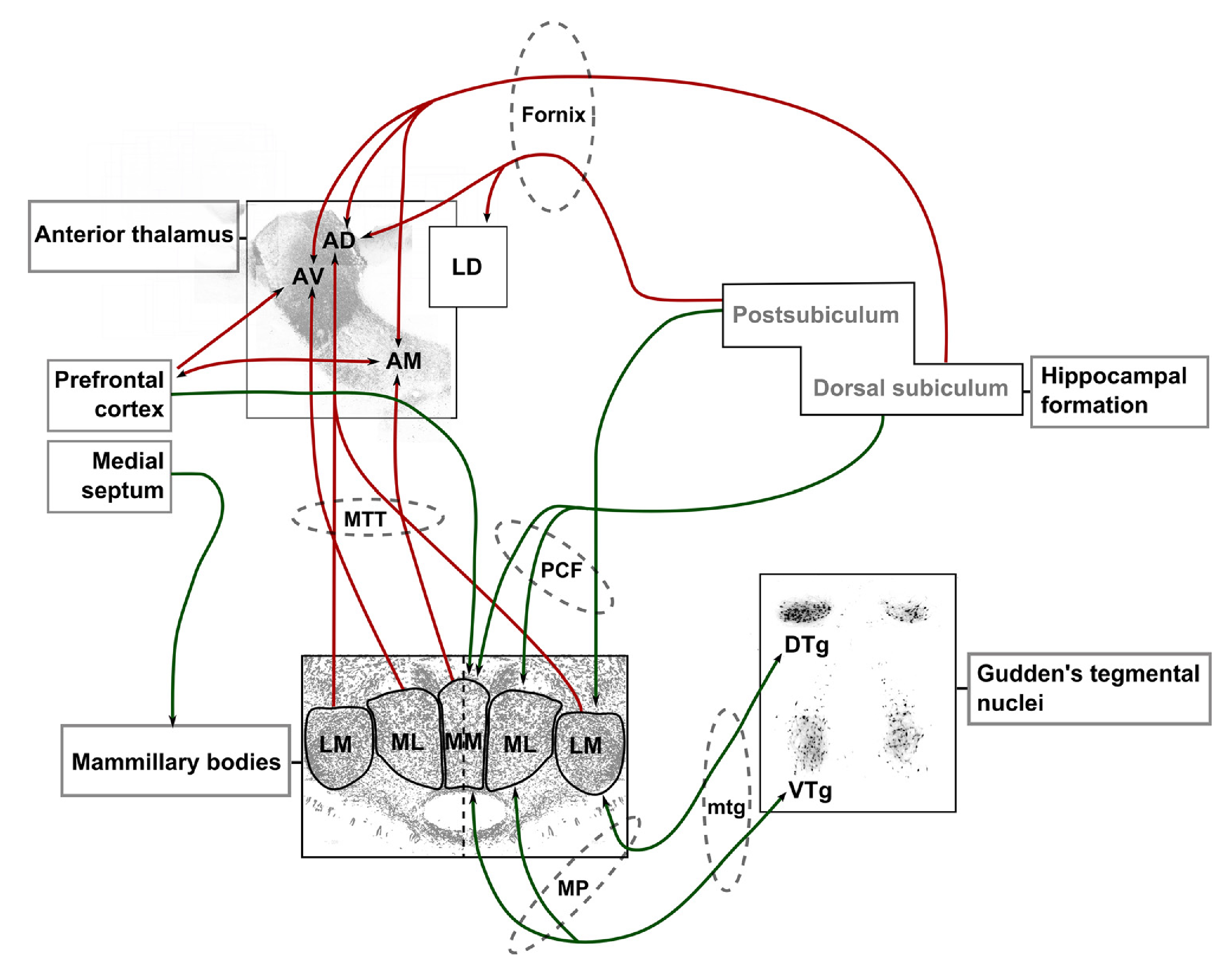
Figure 1: The mammillothalamic system. From Dillingham et al., 2015.
The mammillothalamic system (Figure 1) is a network of areas centered on the anterior nuclei of the thalamus that anchor the path integration process, starting with two basic signals that are generated in midbrain areas known as Gudden’s tegmental nuclei, specifically the DTN (dorsal tegmental nucleus) and VTN (ventral tegmental nucleus). Most of the neurons in the DTN encode head velocity information based on vestibular inputs, while those in the VTN exhibit phasic bursting at the theta timescale (200 ms, 10 hz) generated by a set of cellular mechanisms.
Both the DTN and VTN send inhibitory projections to their mammillary body targets, e.g., DTN inhibits the lateral nucleus of the mammillary bodies (LMN). The LMN is where head direction cells first originate, through a recurrent system via the anterodorsal (AD) thalamic nucleus which projects to the dorsal presubiculum (also known as the postsubiculum), which then projects back to the LMN (figure).
Head direction cells
The emergence of head direction cells in the LMN has been extensively studied and is relatively well understood (Taube, 2007). The critical computational mechanism is a ring attractor that represents the 360 degree compass-like orientation of the head in allocentric coordinates, as proposed by a set of four foundational papers that all came out at about the same time (Skaggs et al., 1994; Sharp et al., 1996; Zhang, 1996; Redish et al., 1996).
Excitatory loops among isocoding neurons (neurons encoding the same direction) maintain the current head direction signal, while laterally inhibiting other directions. This is the standard recipe for stable activation across multiple brain areas. Vestibular signals reflecting head motion then push this bump of activity around.
The primary difficulty with such a system is that it requires precise tuning of the synaptic weights to yield a properly calibrated signal, that also remains stable over time when the head is not moving. Ring attractors are notoriously sensitive to perturbation by noise (Brody et al., 2003; Barak & Tsodyks, 2014; Lim & Goldman, 2014), which is ubiquitous in the brain.
The evident solution to this and other such fine tuning problems in the vestibular system is provided by the cerebellum, which primarily learns to precisely predict and cancel the effects of self-motion on other sensory cues. One important consequence of this cerebellar learning is that the inputs that drive the head direction updates automatically include the effects of all manner of motor actions to move the head and body, which the cerebellum integrates into corresponding sensory predictions about the vestibular consequences.
This same error-driven predictive learning mechanism in the cerebellum can also tune the ring attractor synapses to accurately maintain a consistent head direction bump in the absence of input, and also accurately update to reflect the net head and body movement.
Hippocampal replay and preplay
Relevant literature: Gillespie et al., 2021 Schmidt et al., 2026 Yu et al., 2026 Tang et al., 2026
Graphs vs. maps
Warren, 2019, Peer et al., 2021, Raju et al., 2024; Parra-Barrero et al., 2023