
Anatomy
This page provides a big-picture overview of brain anatomy and terminology.
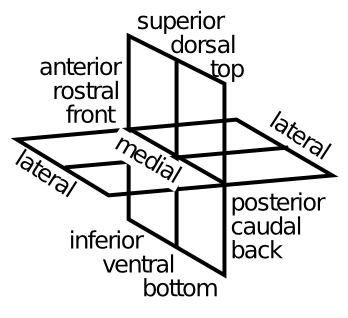
Figure 1: Terminology for referring to different locations in the brain.
Figure 1 shows the various terms used to refer to different locations in the brain. We also often use the following letters in the names of areas:
- • v = ventral
- • d = dorsal
- • m = medial
- • l = lateral
- • a = anterior
- • p = posterior
So, the dlPFC is the dorsal+lateral (dorsolateral) prefrontal cortex, for example.
Due to the developmental recapitulation of evolutionary trajectories, there is a basic anatomical plan established early on, where dorsal areas are primarily sensory and ventral areas are primarily motor. Furthermore, because development proceeds radially outward in the neural tube, the medial areas are the most evolutionarily ancient and thus have the most important survival-relevant systems.
Therefore, the areas that regulate survival-relevant behavior (i.e., emotions) tend to be in the ventral and medial areas of the brain. Conversely, dorsal and lateral areas tend to be evolutionarily more recent and more sensory and cognitive in nature, e.g., the dlPFC.
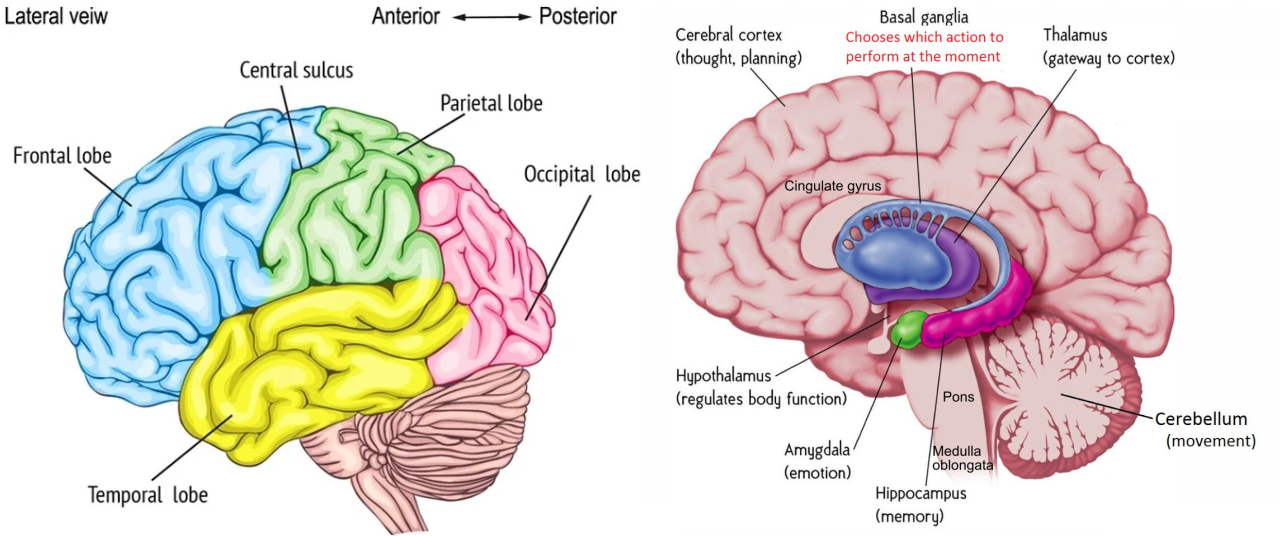
Figure 2: Major lobes of the cortex and major areas of the brain.
Figure 2 gives a big-picture overview of the major areas of the brain and lobes of the neocortex. Other areas included in the Axon models are:
• Basal ganglia for reinforcement learning of actions and a key element of the Rubicon goal-directed behavior system.
• Cerebellum for predictive learning of the sensory outcomes of motor actions.
• Thalamus plays multiple essential roles in relation to the neocortex, including predictive learning in posterior neocortex, and modulatory control over the frontal and prefrontal cortex, driven in part by the basal ganglia.
• Amygdala is a key element of the Rubicon model and is critical for emotion, captured in the PVLV model of phasic dopamine firing for example. The hypothalamus, medulla oblongata, and other brainstem nuclei are also included in these systems.
• Hippocampus is critical for episodic memory (rapid learning of specific events) and representations of space and time.